Art Science Museum Trip
Visiting the Another World Is Possible exhibition with Andreas offered a needed reset in the middle of all the making.
The exhibition felt like a reminder that speculative design doesn’t have to be distant or abstract but it can be tactile, humorous, poetic, and
grounded in alternative ways of sensing the world. Moving through the space with the class felt almost like trying on different futures
one room at a time, each asking its own version of: how else could we live, listen, build, or dream?
The work I found the most interesting was definietly Space Station by Torlarp Larpjaroensook. This work felt playful in the best way
handmade, and very alive. Space Station uses salvaged materials and DIY electronics in a way that makes the technology feel approachable rather than intimidating
as someone who used to find technology intimidating it was really interesting.
I liked how it created a sense of imagined infrastructure using things that looked like they shouldn’t belong together, yet somehow worked.
The work reminded me that interactive systems don’t need to be polished to be meaningful; sometimes the most amazing interfaces are ones where the wires are visible,
where touch and improvisation are part of the experience. It aligned with my interest in prototyping as an ongoing conversation with the materials, not a final “solution.”
-
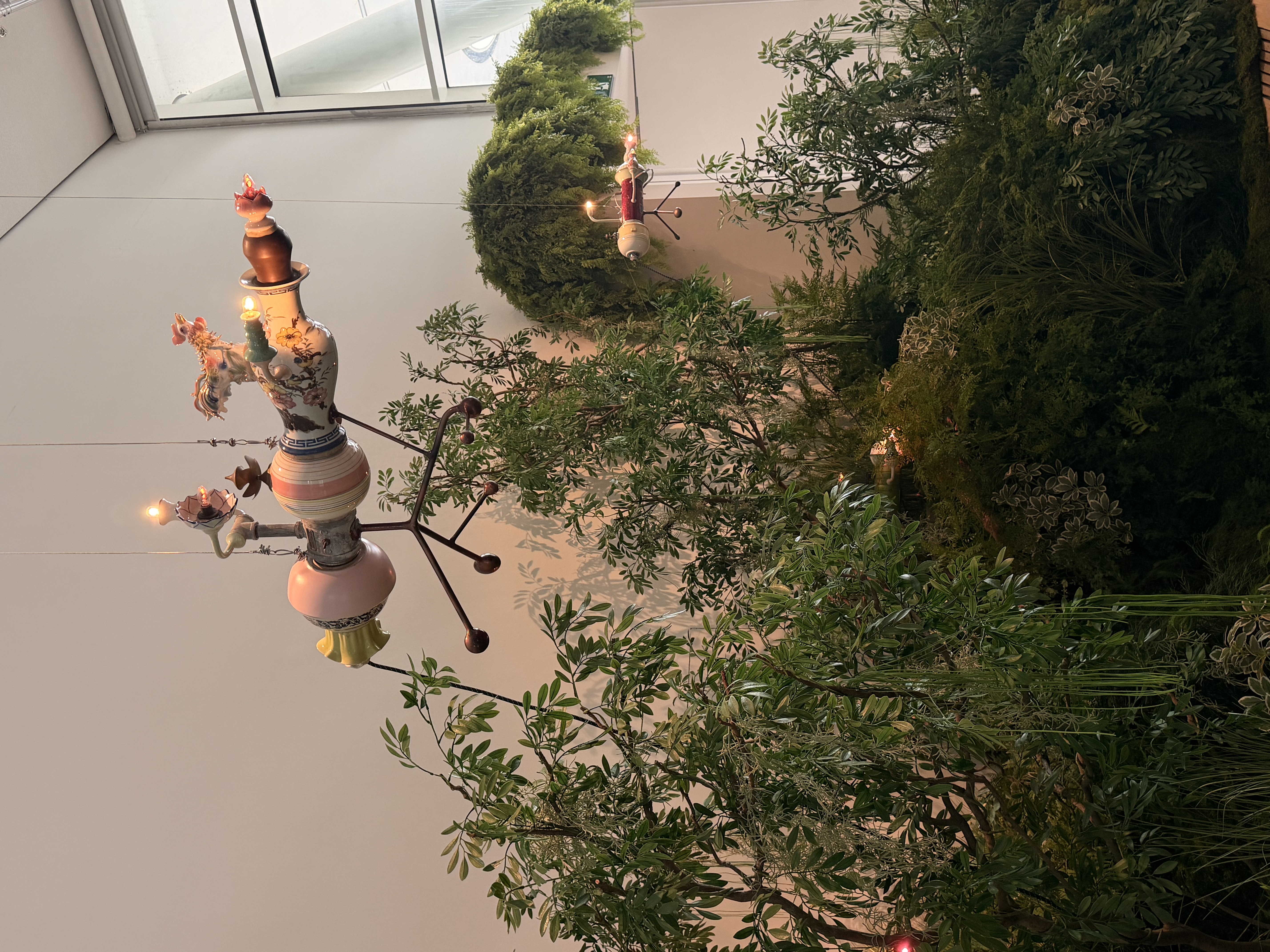
Space Station (2023) — Torlarp Larpjaroensook -
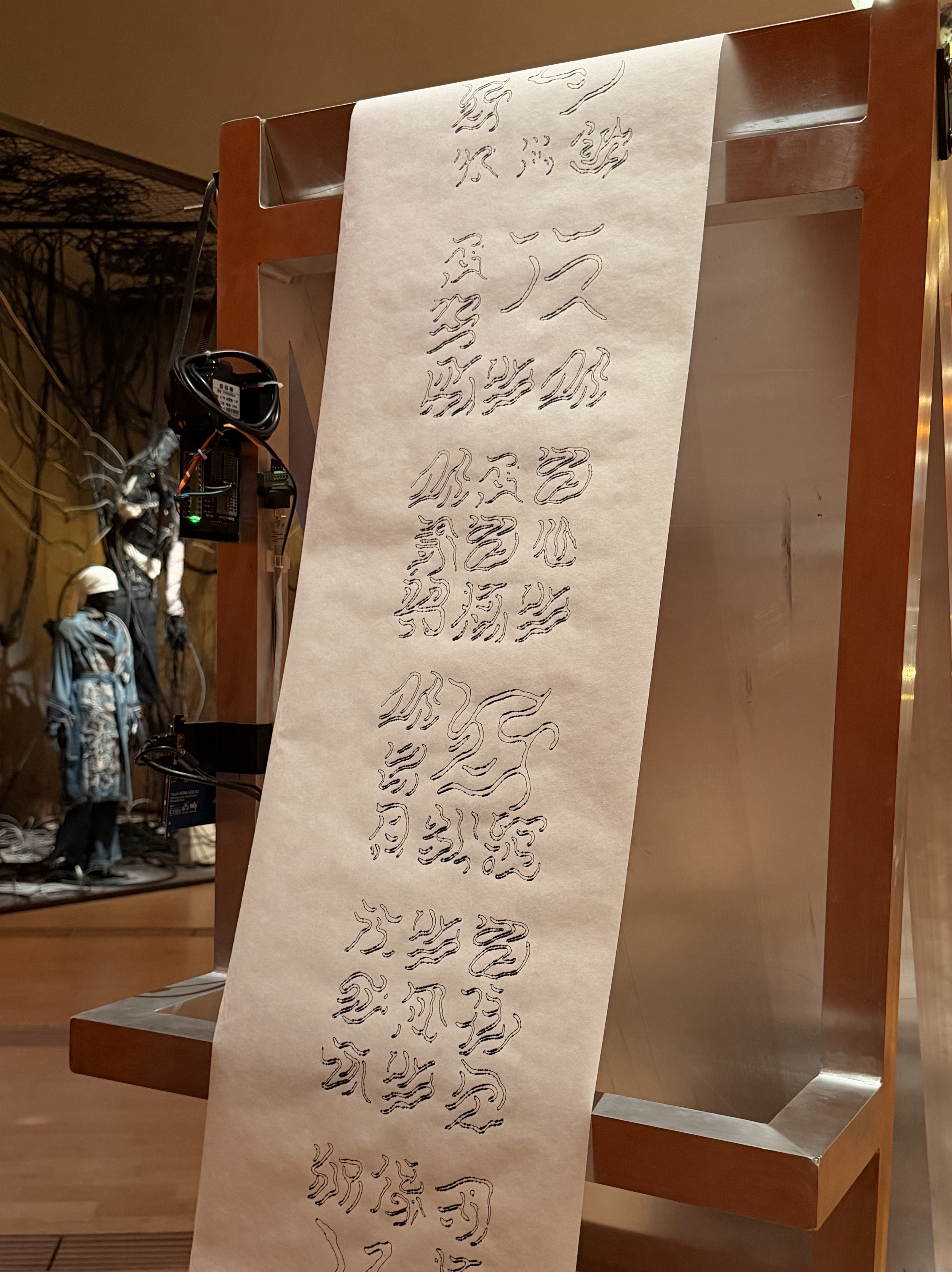
Cloud Scripts — Ong Kian Peng -
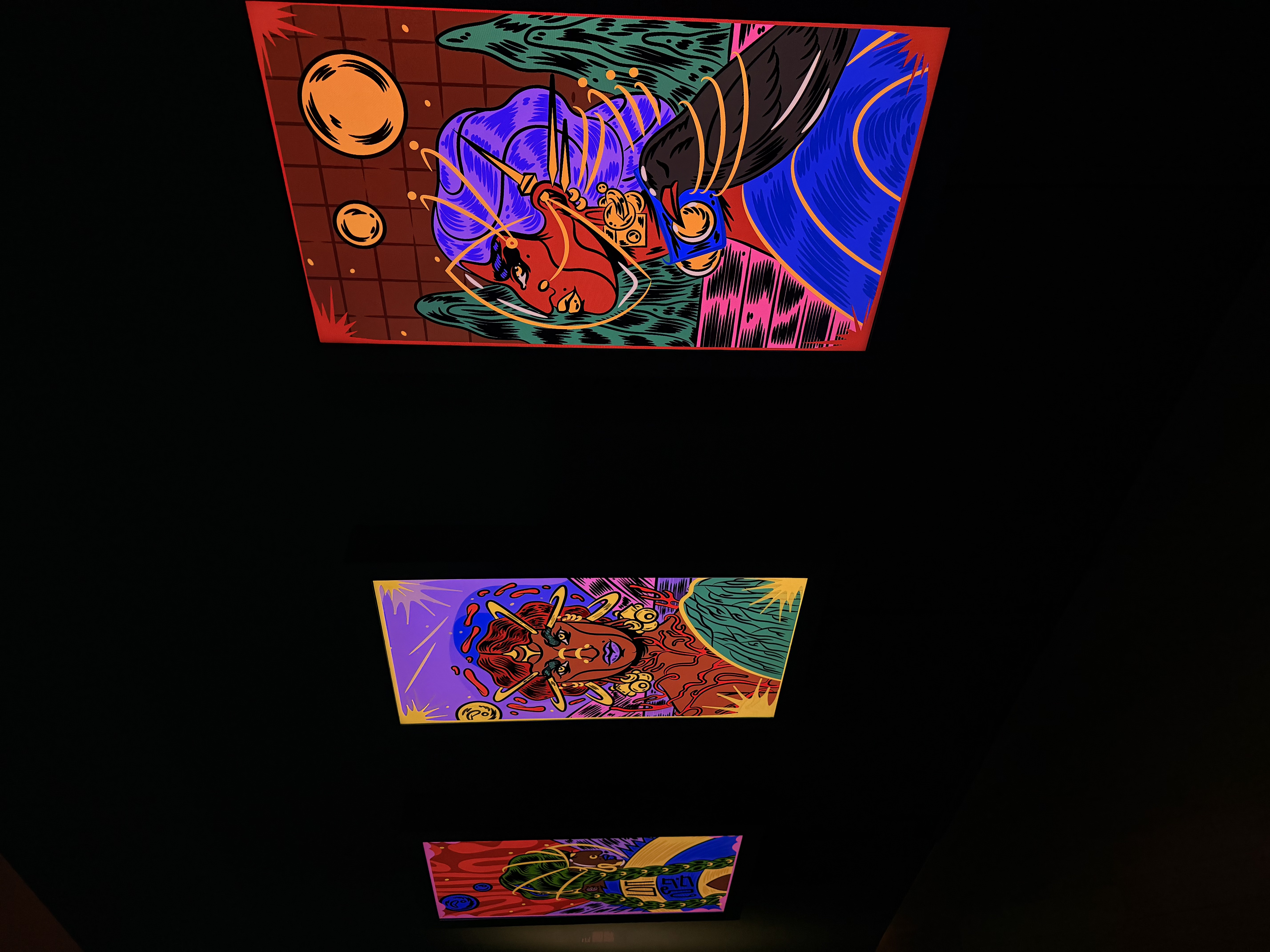
Introduction to Afrofuturism -
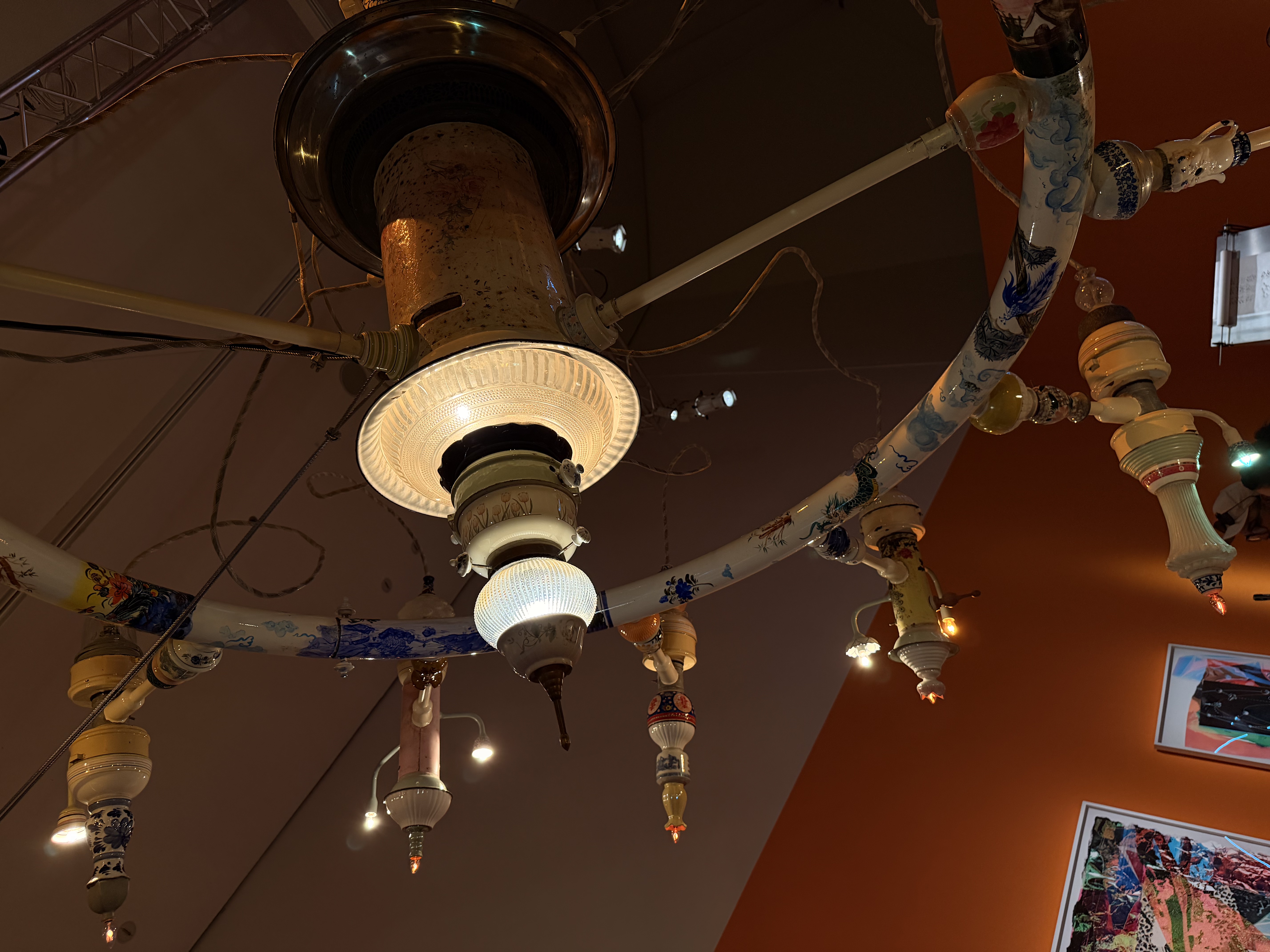
Space Station (2023) — Torlarp Larpjaroensook
Another work I found really interesting was definitely Cloud Scripts. It stood out to me because of the way it bridges the mechanical and the mystical.
The work uses an AxiDraw machine to generate talismans traditionally meant to protect, guide, or hold intention—based on computational processes. I liked how the
machine isn’t just producing shapes; it’s participating in a ritual, translating algorithmic patterns into symbolic marks. The Afrofuturism section shifted the
atmosphere from speculative machines to speculative identities. What struck me was the focus on sound, music, and oral traditions also stood out,
especially how these forms become carriers of memory and resistance.
The visit pushed me to rethink my own project from angles I hadn’t considered before. Each work in the exhibition approached “possible futures” not by imagining new technologies, but by reframing how we relate to what already exists
This made me realise that my research doesn’t have to focus only on perfecting the mechanics of sound and haptic interaction; it can also investigate the attitudes, rituals, and meanings embedded in these interactions.
-
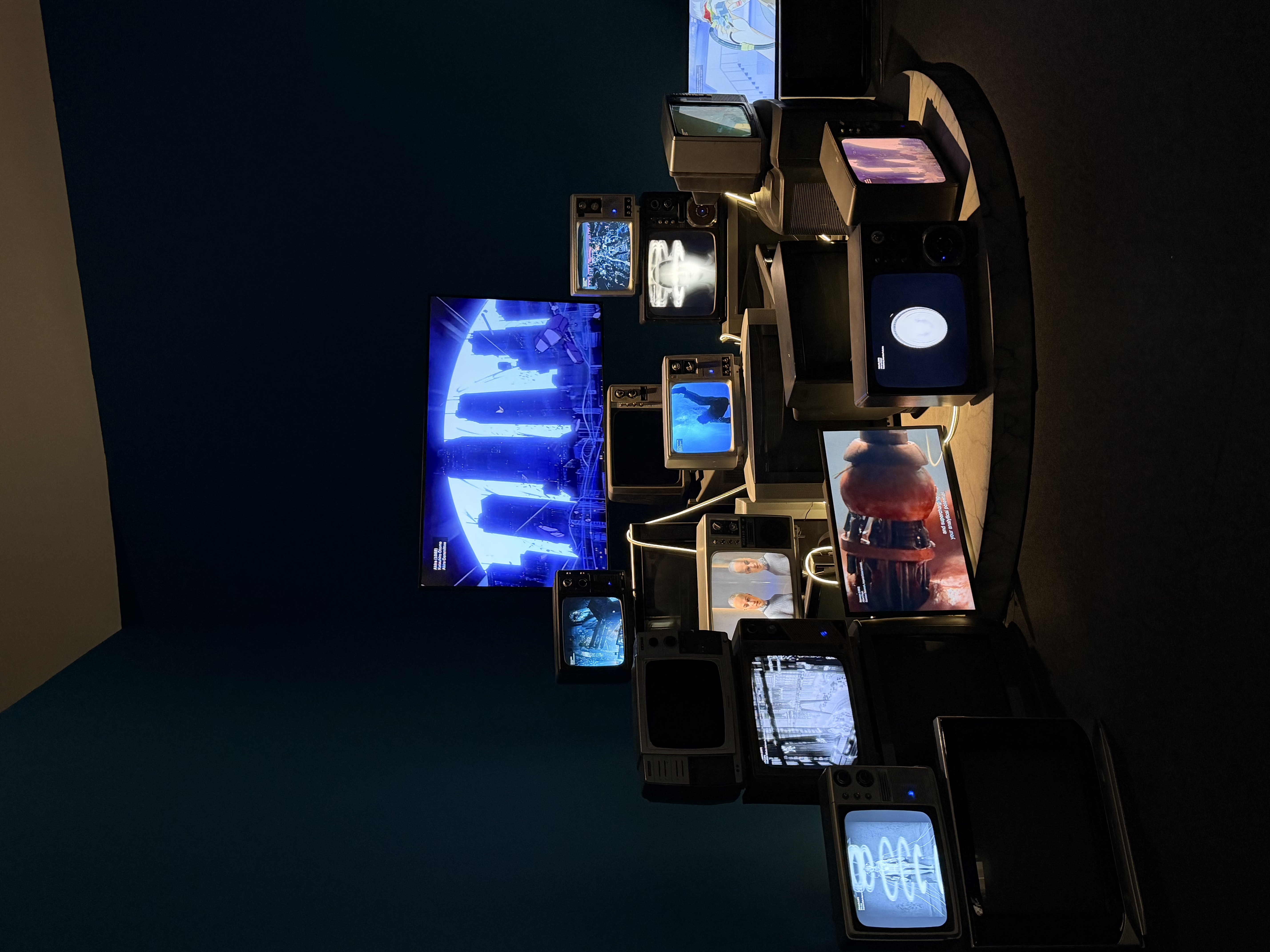
On eof the works in the first part of the exhibition -
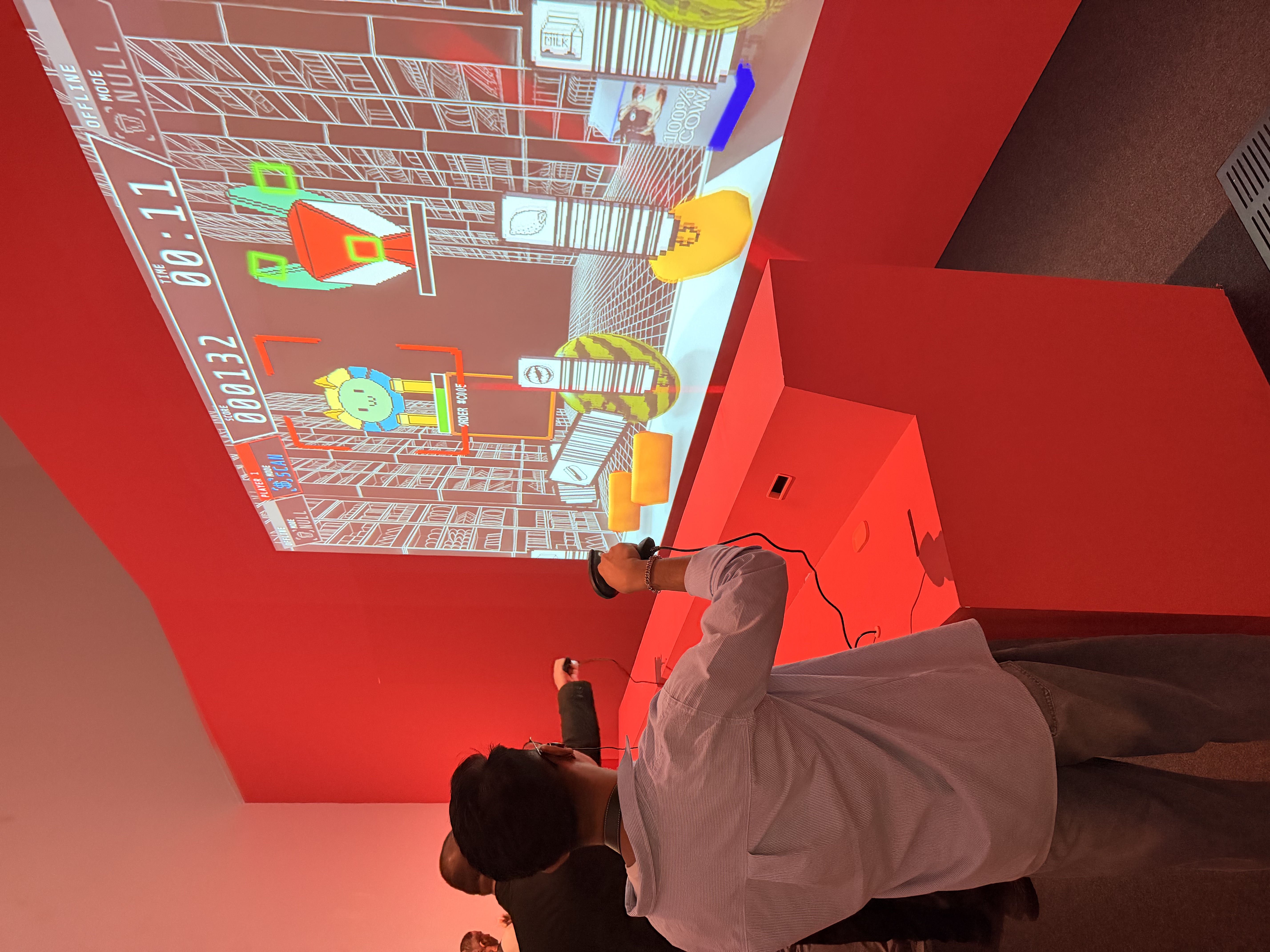
An interactive game- BARC by Interactive Materials Lab.
Exploring MIDI and Joystick
This week I decided to be a lot more exploratory instead of forcing myself to keep doing the same things
I had been doing, mostly because everything was starting to feel a bit monotonous and mentally flat. I felt
like I was repeating the same patterns without actually discovering anything new, so I wanted to shake myself out
of that loop. Since Friday’s class had so many materials, tools and mini-stations happening at the same time, I
thought it would be stupid not to use that to my advantage.
So I worked with Yerin and we basically went around trying to understand how the touch board, the MIDI setup and even the
joystick could be used. None of these were “projects” in any way, they weren’t perfect, they didn’t have a concept, and they definitely
weren’t leading to a final outcome yet. They were just tiny experiments, more like quick encounters with different interfaces to see what they could do and how they behaved.
Here are somethings we tried:
-
Created a sketch with MIDI where we can rotate the rectangle and also change it to a circle. -
Created a sketch where the joysick can move the circle left and right anf also leaves a trail behind. -
An example on how we could create a composition on it.
What I liked about doing it this way was that it reminded me that interaction doesn’t always have to start with a big idea. Sometimes it can start with literally touching a sensor, running a cable into the laptop, seeing whether the software even recognises it, and letting the material guide what happens next. I realised there are so many ways to connect different materials to the laptop, so many softwares we can run them through, and so many little possibilities we don’t usually think about because we stay stuck in our usual tools. It felt refreshing to let myself play without expecting anything “meaningful” to come out of it immediately.