Consultation Week
This week was mostly about tightening my RPO direction after a consultation with Andreas. The session
pushed me to look at my writing more critically. Not just the content, but the way I’m framing the whole thing.
I realised I needed to be clearer about the intention behind my research, and how my practical experiments connect back
to the theory. More importantly, the discussion helped me think about why this work matters: what I’m contributing to ongoing
conversations around sound and interaction, and how my project sits within that space. It felt like a good space, grounding both
the purpose and the direction of what I’m building.
From the Case Studies framework workshop, my biggest realisation was that I wanted to go with critical Journal as my
framework since I wish to experiment and continuously adapt to what I read online. I do not want to base it on existing case studies.
Consultation Reflection
During the consultation, Andreas reviewed my initial thesis draft and gave detailed feedback that
made me shift my approach. He emphasized that my writing needed to centre around the topic itself,
instead of acting as a glossary of terms or ideas. My earlier draft focused heavily on definitions of sound,
tangibility, participation but lacked depth in connecting these concepts to my own experiments and critical readings.
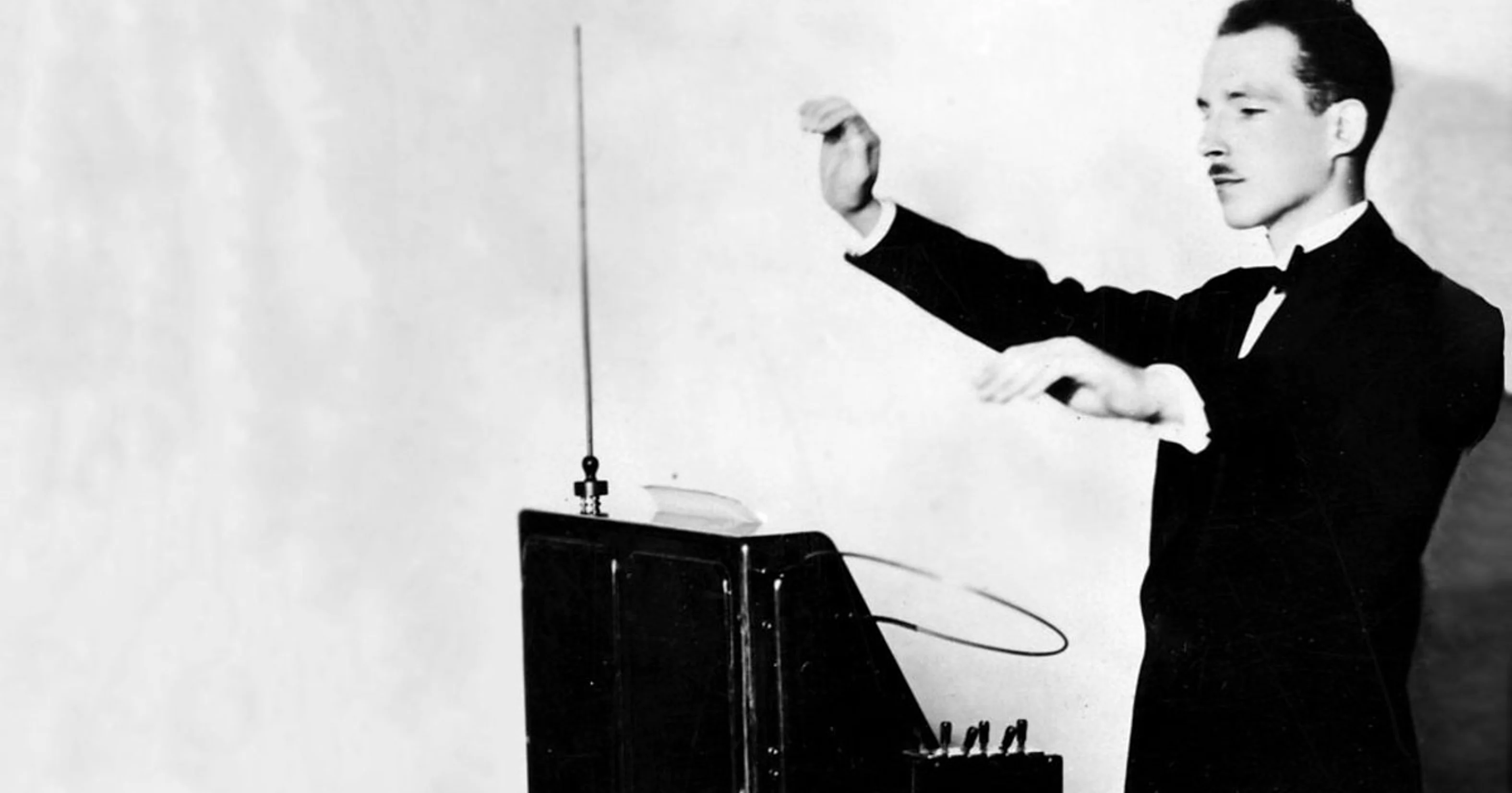
Key feedback included:
(i) It should be about the project, not a glossary.
(ii) The three pillars can serve as subheadings for summaries of readings, rather than standalone topics.
(iii) Use existing works as examples to show what others have done and how your work enters that conversation.
(iv) The majority of your writing should come from readings, but you must explain why they are relevant.
(v) Refine your title and subtitle- they need to communicate both focus and intent.
We also discussed how my writing should address two fundamental questions:
What do others know and think about this topic?
How does my work contribute to that knowledge?
The discussion clarified the importance of articulating the purpose and impact of my project.
My intention has always been to explore sound as something tangible, performative, and participatory,
but I had not yet made explicit how this connects to the larger field of media art or design research.
Andreas encouraged me to think about:
What others already know and believe about sound, tangibility, and data.
What perspectives or methods my project introduces that are new.
How my outcomes (experiments, visuals, code) can act as a contribution to the dialogue between sound, body, and interaction.
By reframing my writing this way, I started to focus more on making the RPO like a critical reflection on how sound behaves
through my experiments — how it moves, touches, and reshapes digital space
Experiment 03- Letter–Sound Sequencer
In this experiment, I designed a p5.js sketch that turns the keyboard into an instrument. Each key
from A–Z is mapped to a specific frequency (based on a C major scale across several octaves) and a
corresponding colour value. When I press a key, I hear a short sine tone and see the letter appear on screen as a large,
coloured character that briefly floats and fades out.
The sketch also records the timing of each key press.
Once I am done typing, pressing ENTER triggers a playback mode, where the sequence of letters is replayed by
the computer: the same notes are replayed in the same order and rhythm, while the letters reappear as visuals across the
canvas. In this way, typing becomes a form of live composition, and the playback becomes a kind of memory trace of that interaction.
Pressing ENTER “replays” the constellation in the exact order it was created, like a memory unfolding star by star.
-
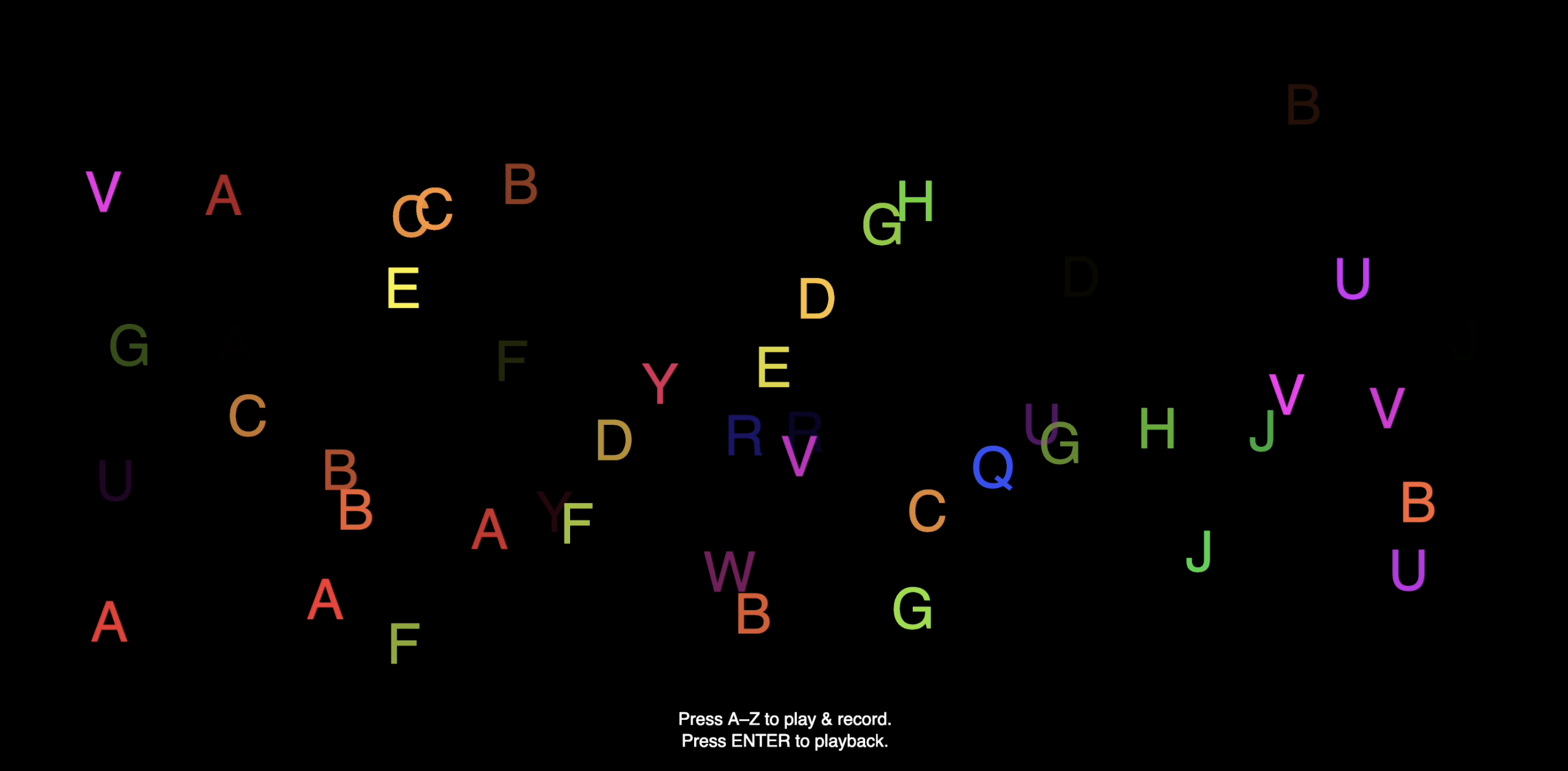
Shows the different places and colors of every letter -
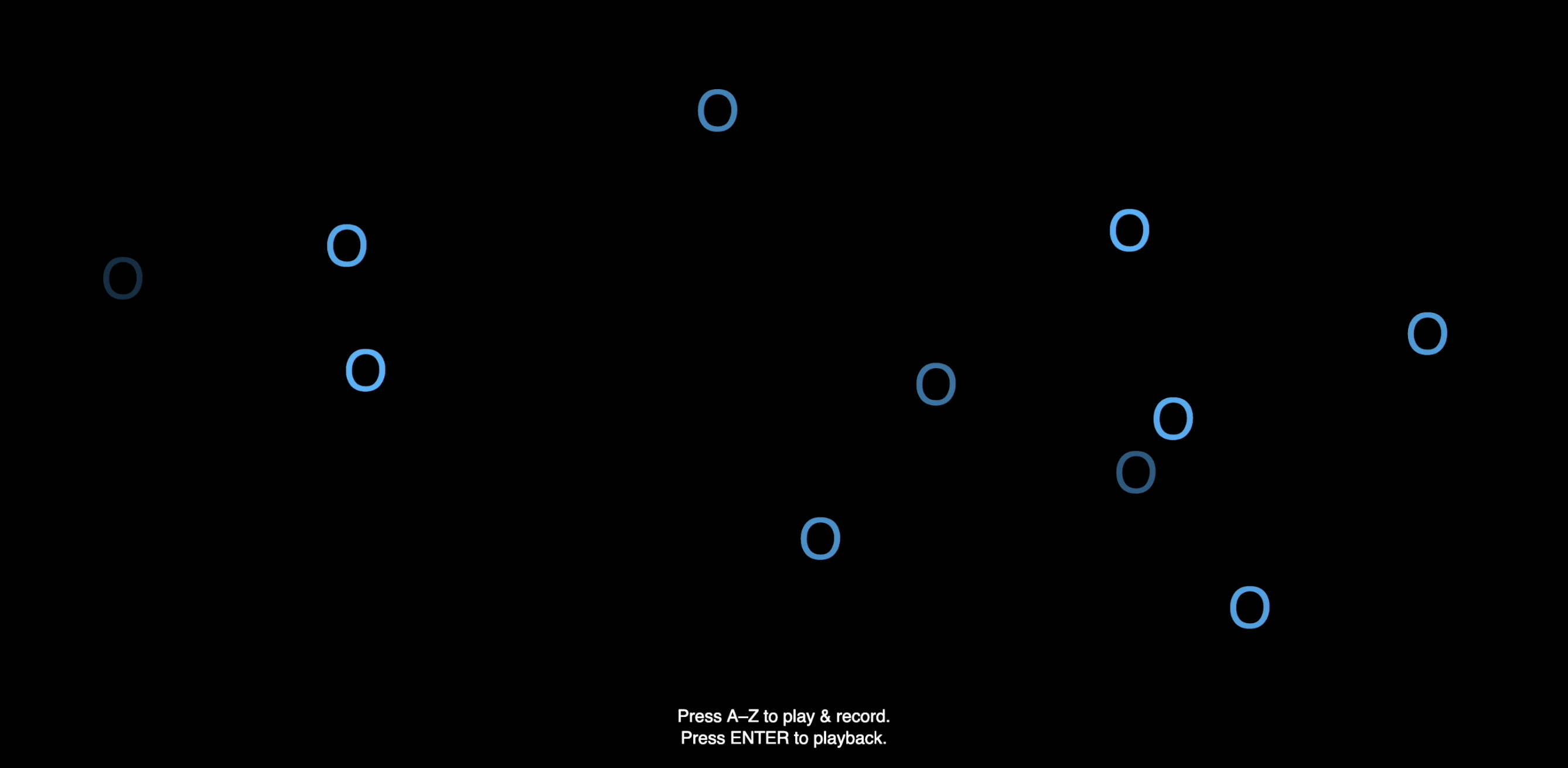
One letter at various places -
A more calm version of the sketech -
A chaotic fun mess version of the experiment
What I Observed / Insights
When I typed actual words (like my name or phrases), the resulting sound sometimes was surprisingly fun.
The timing of my typing mattered a lot: slow, spaced-out keystrokes produced something more like a minimal, ambient pattern, while fast typing became noisy and chaotic.
Playback felt like listening to a memory of my own gesture. I could hear and see how I had interacted earlier, but now from a slightly distanced, observational position.
The sounds were a bit limited and that could be explanded to using multiple instruments.
I also felt maybe adding more options to make it interactive and also act on the memory part would be an interesting approach moving forward.
Wrapping Up
As I wrap up this week, I’m noticing how this experiment shifted the way I think about interaction.
What started as a simple mapping of letters to frequencies became a small ecosystem where sound, colour, timing,
and gesture all coexist. Typing no longer felt like typing. It felt like leaving traces, dropping breadcrumbs of
intention that the computer could later replay back to me.
This idea of interaction-as-memory is becoming more important for my project. The playback function especially made me think about how
the computer “remembers” my actions differently from how I do, perfectly timed, mechanically consistent.
Moving forward, I want to extend this concept beyond sound and visuals. If sound can replay a gesture’s timing, then vibration should be able
to echo its physicality. I’m imagining a version of this experiment where the letters don’t just trigger tones and colours but also specific
haptic signatures like short taps, directional pulses since they both operate on the same frequencies. It would bring the interaction closer to the body and help me understand how
sonic and tactile memories can align or diverge.
I also want to explore layering: building multiple sequences, letting them overlap or collide, and studying what happens.
Is it harmonious? Chaotic? Overwhelming?
Next week will be about bringing these ideas closer to letting them overlap, tightening the logic between modalities, and slowly building towards a multisensory interaction that
feels coherent, embodied, and responsive.